 Cart
Cart






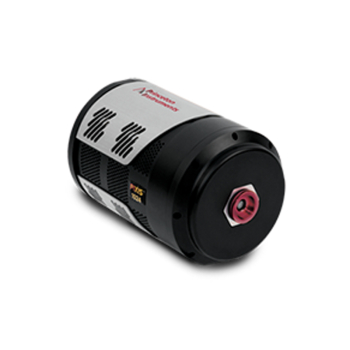

| Coad | 672027 | Type | CCD Cameras | |
| Dimension | 1659 x 1181 x 1138mm | CCD Format | 2048 x 512px |
| Pixel Size | 13.5 x 13.5μm | Image Area | 27.6 x 6.9mm | |
| Pixel Fill Factor | 100 | Dark current@-75°C (e-/p/sec) | 0.001 (typical) |
| Deepest Cooling Temperature | -75°C guaranteed | Thermostating Precision | ±0.05°C | |
| Vertical Shift Speed | 15.2 Psec/row | ADC Speed/Bits | 100kHz/16-bit and 2MHz/16-bit |
| Non-linearity | <1%@100kHz | Data Interface | USB2.0 | |
| Certification | CE | Weight | 2.27kg (5lbs) |
| Optical Mount | Princeton Instruments Acton spectrometer adapter with optional shutter | Cooling Method | Thermoelectric air or liquid cooling (CoolCUBE II required) | |
| Spectrometric Well Capacity(High Sensitivity) | 250 ke- (typical), 150 ke- (min) | Spectrometric Well Capacity(High Capacity) | 750ke- (typical), 600ke- (min) |
| System Read Noise@100 kHz | 3.5e- rms (typical), 6e- rms (max) | System Read Noise @2 MHz | 14e- rms (typical), 20e- rms (max) | |
| Software Selectable Gains | 1.5, 3, 6e- (high sensitivity); 3, 6, 12e- (high capacity); available at all speeds | Operating Systems Supported | Windows 8/7/XP (32-bit), Windows 8/7 (64-bit) and Linux |
| I/O Signals | Two MCX to BNC connectors for programmable frame readout, shutter, trigger in | Operating Environment | +5 to +30°C non-condensing | |
| Features | Back-illuminated CCD with eXcelon technology. Enhanced sensitivity in the UV and the NIR with low etaloning. |
Traders City price 999999.00$ The different purchase price may be caused by the store's previous promotion activities. For details, please consult the seller
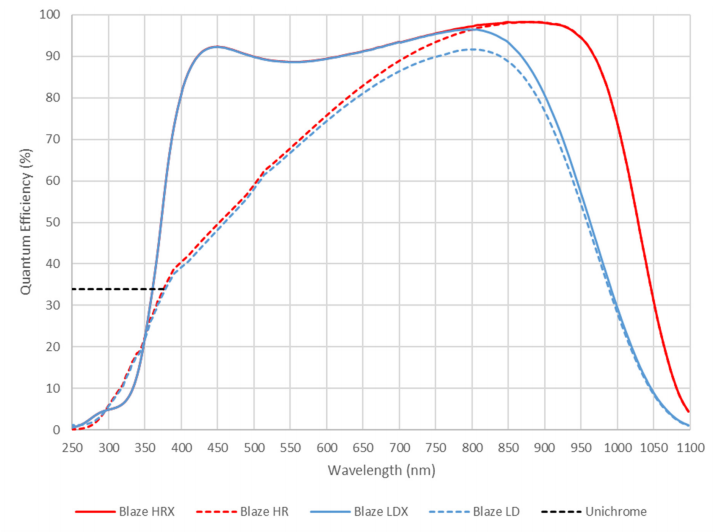
Optical spectroscopy applications. Designed utilizing PI’s exclusive XP cooling technology, PIXIS offer thermoelectric cooling down to -75°C, while the all-metal, hermetically sealed design, with the industry’s only lifetime vacuum guarantee, ensures maintenance free operation. Choose either back-illuminated (B/BUV) or eXcelon versions of the 2048 x 512 CCD, for optimized performance from UV to NIR. High QE and ultralow-noise electronics make the PIXIS: 2K series of camerasideal for demanding,lowlight applications technology delivers the highest sensitivity in the NIR while suppressing the etaloning that occurs in standard back illuminated CCDs. Dual speed operation at 100kHz or 2MHz allow these cameras to be used for steady state as well as fast kinetics studies.


Product evaluation
%High praise
There are comments